
No Public Active Warrant Portal Located in Leon County
There is no public, online active-warrant lookup for Leon County. Research across the official sources did not turn one up. The Leon County Sheriff's Office (LCSO) is clear about this. Its Detention Facility FAQ states the agency does not give out warrant information unless the person asks for it in person. The FAQ then advises a person to turn themselves in at the detention facility, with a valid state-issued ID, to find out what they need to know.
So a typical "type a name, see a warrant" tool does not exist here. That can feel like a dead end, but it is not. You still have real options. The sheriff handles warrant questions in person. The clerk's public court files often show events tied to a warrant. And state criminal-history records can be ordered for a fee. Each path is official, and each is covered on this page.
Important: Do not trust unofficial warrant sites that claim a live Leon County feed, because no public active-warrant database exists and their data may be wrong.
One more thing worth saying up front. A warrant is a court order, not a customer-service request. How you handle it has legal weight. Many people speak with a lawyer before they make any contact, and that is often the wiser first move.
LCSO Warrants and Civil Division
The sheriff's office runs a dedicated Warrants and Civil Division for the county. This is the local office tied to warrant process and service. Because the agency will not confirm warrant details by phone, the division and the detention facility are where in-person warrant business gets done. You can find general agency information through the Leon County Sheriff's Office site.
The contact details below come from official LCSO listings. Use them as your starting point for warrant questions, in-custody bond steps, and release timing. Phone lines for the detention center and releasing office help when someone is already booked.
LCSO Warrants & Civil Division
3333 West Pensacola Street, Suite 200
Tallahassee, FL 32301
850-606-3450
Leon County Detention Center
535 Appleyard Drive
Tallahassee, FL 32304
850-606-3500
Releasing Office: 850-606-3526
The agency's public site, the Leon County Sheriff's Office, is where the division and its contact listings live online.
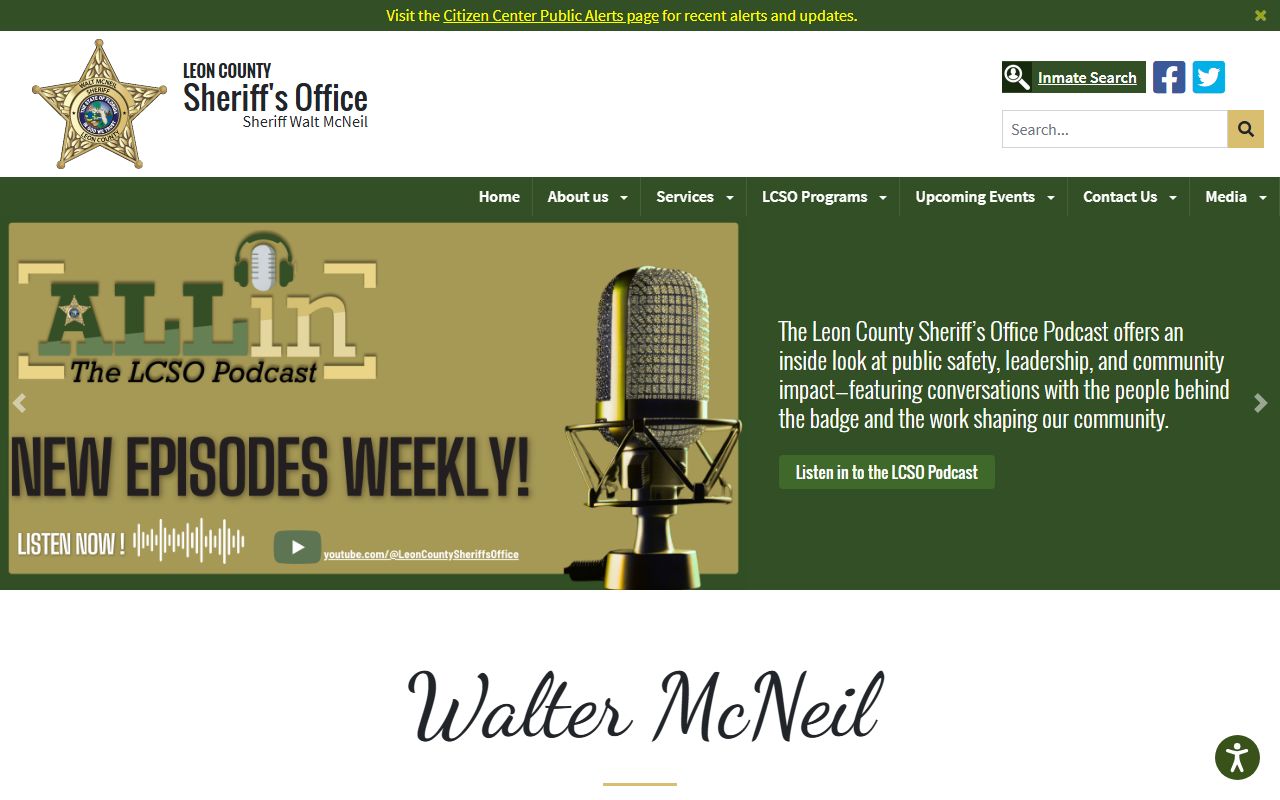
The sheriff's site routes warrant questions to in-person contact, which is why the division address and phone above matter more than any online search box.
Keep in mind what each office does. The Warrants and Civil Division handles warrant process and civil service. The detention center books and holds people. The releasing office deals with bond and release. For statewide criminal history, the Florida Department of Law Enforcement runs a separate, fee-based search that sits outside any county warrant question.
Types of Warrants in Leon County
Not every warrant is the same. The label changes with why a judge signed it and what it lets law enforcement do. Knowing the type helps you ask the right questions and pick the right path to resolve it. A few of these are not strictly warrants, but they show up in the same conversation often enough to list here.
- Arrest warrant
- A judicial order that lets police arrest a named person, based on probable cause that they committed a crime.
- Bench warrant or capias
- Issued by a judge after a missed court date, a failure to comply, a probation violation, contempt, or nonpayment in some cases.
- Search warrant
- Authorizes a search of a place, device, or person for evidence. It is usually not public while active.
- Fugitive warrant
- Tied to wanted status from another county or another state, used to hold a person for transfer.
- Capias pro fine
- Collection-related process that may issue for unpaid fines or costs, depending on the case type.
A risk protection order is a separate matter, not a warrant, but firearm surrender and enforcement steps tied to one may appear in court records. If you are unsure which type applies to you, a defense lawyer or the clerk's docket can usually tell from the case file.
How Warrants Appear in Court Dockets
Even without a warrant portal, the clerk's court files are a useful window. When a judge issues a capias or a related order, that event often lands on the public docket. So a name search in the clerk's court records can flag warrant-linked activity, even though it will not show a standalone "active warrant" listing. The Leon County court dockets page explains how to read a progress docket event by event.
The events tied to warrants tend to follow a pattern. They show why a warrant issued and, later, whether it was cleared. Watch for these entries in a case file.
- Capias or warrant issued, with the date and the judge or division.
- Failure to appear, which often triggers a bench warrant.
- Bond forfeiture, when a defendant misses court after posting bond.
- Recall or quash order, which clears a warrant once the issue is fixed.
- Reset or new court date after a warrant is resolved.
The clerk's court records are the better source for case status and final outcome, not the sheriff. The LCSO inmate search may show a booking once a warrant is served, with the charges, arrest date, and jail status, but it is informational only and does not report a final disposition. Pair both views for the full picture, and use the court records page for the underlying case detail.
What a Leon County Warrant Record Shows
When warrant detail does surface, whether through the clerk's case file or in-person at the sheriff, certain fields tend to appear. There is no public search form that returns these as a tidy list, so treat the table as what the underlying record holds, not as a portal output. Some fields stay hidden while a warrant is active or where the file is confidential.
| Field | What It Shows |
|---|---|
| Case Number | The clerk's case identifier the warrant ties back to. |
| Defendant Name | The named person the warrant or capias was issued for. |
| Warrant / Capias Type | Arrest, bench, capias, search, or fugitive. |
| Issuing Court / Judge | The court division and judge that signed the order. |
| Issued Date | The date the warrant or capias was entered. |
| Charge or Reason | The offense or the failure-to-appear that prompted it. |
| Bond Amount | Bond figure and conditions, where those are public. |
| Served / Arrest Date | When the warrant was served and the person booked. |
| Recall / Quash Date | When a warrant was cleared, if it has been resolved. |
| Related Court Date | The next or reset hearing tied to the case. |
For statewide criminal-history results, which can list warrant-related arrest data, an FDLE search returns a formal record for a fee. That is a different file from a county court docket, and it is the right tool when you need a certified statewide history.
Note: A bond amount or charge may be withheld while a warrant is active, so a thin record does not always mean the warrant was cleared.
Turning Yourself In on a Leon County Warrant
The LCSO FAQ gives a direct route for someone who thinks they have a warrant. Because the agency will not confirm details by phone, it advises the person to come in. You turn yourself in at the detention facility and bring a valid state-issued ID. Staff can then tell you what you came to find out. This is the official path, and many people walk it with a lawyer's help.
The steps below pull together the sheriff's guidance and the clerk's court process. They move from checking the file to clearing the matter and confirming it is done. Doing them in order keeps you from missing a piece.
- Do not rely on unofficial warrant sites for any of this.
- Contact a criminal defense attorney, or the Public Defender if one is already appointed.
- Check the clerk's case search for a missed court date, capias, or bond status.
- Contact the LCSO Warrants and Civil Division, or appear in person as the FAQ directs.
- Bring a valid government ID with you.
- If in custody, call the detention center or releasing office for bond and release steps.
- After it is resolved, confirm the clerk docket shows a recall, quash, or disposition.
That last step matters more than people expect. A warrant can be cleared in court yet still cause trouble if the record does not catch up. If the matter is traffic-related, verify any license hold separately with the state, since that file is not the same as the court warrant.
Bond After a Warrant Arrest in Leon County
Once a warrant is served and the person is booked, the case moves to the bond and first-appearance stage. The LCSO FAQ directs bond questions to the releasing office at 850-606-3526. It says credit-card bond posting is allowed when the person brings the card and a valid ID to the releasing area. Bondsmen lists are available in the releasing lobby and through outside sources.
The agency holds the line on privacy until custody begins. Warrant and bond information is not given out unless the person is in custody or has already bonded. For warrant information before an arrest, the person must ask in person and turn themselves in with valid state ID. Once someone is booked, the Leon County inmate records search may show the booking, charges, and jail status.
First appearance comes quickly after a booking. It is a short hearing where a judge reviews the charge and sets or reviews bond. For a fuller look at what a booking record holds and how custody status updates, the inmate page covers it. Bond amounts on the underlying case may also show in the clerk's court file where public.
Traffic Warrants and License Holds
Traffic matters add a wrinkle. A missed traffic court date or unpaid citation can lead to a capias or a license hold, and those are not the same file. The court case sits with the clerk. The driver-license suspension sits with the state. Clearing one does not always clear the other, so you may need to chase both.
The split shows up like this in practice. A capias for a traffic case appears on the clerk's docket, and you resolve it through the court. A license hold or suspension is a state record, and you verify and clear it through the Florida Highway Safety and Motor Vehicles agency. The FLHSMV handles driver records separately from the county court file.
If you are tracking down a traffic-related warrant, check the clerk's case first, then confirm your license status with the state. The traffic court records page explains how citations and dispositions move through county court, which is where most traffic warrants begin.
The Attorney's Role in a Warrant Matter
A lawyer changes how a warrant plays out. Because the sheriff will not share warrant details by phone, an attorney can often learn more about a case, plan a surrender, and ask the court to set or lower bond ahead of time. That preparation can mean a faster release and a calmer process. For people who cannot afford private counsel and face possible jail time, the Public Defender for the Second Judicial Circuit handles appointed defense.
Appointment is not automatic. It usually runs through court screening and an affidavit of indigency, not a simple phone call for advice. The Public Defender, Jessica Yeary, leads the Second Circuit office, with details at flpd2.com. Conflict cases may go to a separate court-appointed attorney from the circuit's registry.
Whether you hire counsel or qualify for appointed defense, the message is the same. Treat a warrant as a legal matter, lean on official sources, and skip the unofficial warrant databases. For broader background data tied to a charge, the arrest records page and the FAQ cover related questions about Leon County records.